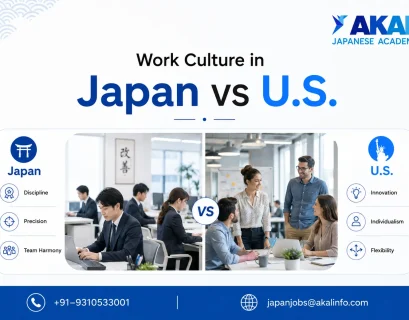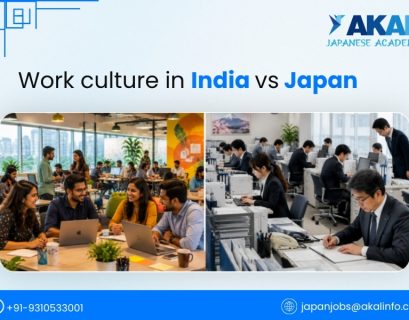

The stereotype about Japan being the place for karoshi (literally translated as “death by overwork”) and strict corporate hierarchy is becoming more and more irrelevant today. From 2019, when the Work Style Reform Act was adopted, until 2025-2026 and numerous subsequent changes, Japan has legally limited overtime work and introduced anti-harassment regulations while opening its doors to foreign specialists as never before, including record numbers of Indians.
1. Why Japan’s Work Culture Looks Different in 2026
After its economic resurgence since its period of industrialization in the Meiji era and subsequent reconstruction, the Japanese economic model created a culture of business marked by loyalty, seniority, and overwork. This has resulted in an excellent level of efficiency alongside the phenomenon of karoshi. In terms of solving this problem, the Japanese government has opted to:
- In 2019, the Work Style Reform Act established overtime caps across the country for the first time and required employers to keep records of employee working hours. One of the reasons for this legislation was the unpaid service overtime that is seen as dedication in Japan.
- 2025 amendments expanded flexible-work and remote-work obligations for parents of young children and extended job-protected leave for childcare and family care.
- From April 2026, companies with more than 100 employees (previously the threshold was 300) must publicly disclose gender pay gaps and the share of women in management roles as part of amendments to the Act on the Promotion of Women’s Participation and Advancement in the Workplace.
- New rules proposed for the coming reform cycle include banning 14+ consecutive working days, mandating advance notice of statutory rest days, and requiring roughly 11-hour rest periods between shifts.
The average annual working hours for Japan were down to 1,636 hours in 2023 (down from around 1,900 in the early 1990s) based on Ministry of Labour statistics collected through TokyoDev’s overtime calculator. However, the tale of 80-hour work weeks for all is outdated for most modern-day Japanese companies.
2. Working Hours in Japan Per Day
Statutory provisions in the Labour Standards Act are as follows:
- 8 hours a day, 40 hours a week, for those who are 18 years or older.
- Required rest periods: not less than 45 minutes where a shift exceeds 6 hours and not less than 1 hour where it exceeds 8 hours.
- At least one rest day per week, or four rest days within any four-week period.
- A typical corporate schedule runs 9:00 a.m.–6:00 p.m., including a one-hour lunch.
Overtime rules (the “36 Agreement”)
Employers can only legally require overtime if they sign an Article 36 Agreement with a majority-representative union or employee representative and file it with the Labour Standards Inspection Office. Even then:
Overtime pay is legally mandated at a minimum of 125% of the normal wage, rising to 150% for any overtime beyond 60 hours in a single month (a rule that became mandatory for small and medium-sized enterprises, not just large companies, from April 2025). Night work (10 p.m.–5 a.m.) adds a further 25%, and statutory holiday work is paid at 135%.
Note for foreign workers: Being in a position with “Manager” in its name doesn’t necessarily exempt an employee from receiving overtime payment. The Japanese courts, following the famous 2008 McDonald’s Japan case, examine the real decision-making power of a worker instead of just looking at his or her job title to determine whether an exception can be made. It is possible to file a complaint about unpaid overtime dating back to three years.
3. Working Days in Japan
Most companies have workdays from Monday to Friday, making the weekend their days off, thus changing the old pattern of having six days a week. Facts to consider:
- Annual paid leave starts at 10 days per year after six months of service and increases by roughly one day annually, up to a maximum of 20 days, per the Labour Standards Act.
- Japan had 19 national public holidays in 2026, including New Year’s Day, Coming of Age Day, Constitution Memorial Day, Marine Day, Mountain Day, and Culture Day, among others.
- Some companies are piloting four-day work weeks with pay held constant, though this remains a minority practice as of 2026 rather than the norm.
4. How to Work in Japan: Step-by-Step
- Secure a job offer from a Japan-based employer (or an intra-company transfer if you already work for a multinational with a Japan office).
- Employer applies for a Certificate of Eligibility (COE) through Japan’s Immigration Services Agency.This confirms you meet the conditions for the relevant visa category.
- Applying for visa in the Japanese embassy or consulate of your home country is the next step to take, including the COE, passport, photographs, and other necessary documents.
- Arrive in Japan within three months from visa issuance.
- Register your address in the next 14 days upon arrival to get your residence card.
Processing for the visa itself is typically around 5–10 working days once the COE is issued, though COE issuance can take several weeks to a few months.
5. Work in Japan for Indian Professionals: Visas, Salaries, and Demand
The technical, engineering, and health care skills of Indians are actively sought after amid the ageing work force of Japan. Some background: while the labor force of Japan has crossed 70 million for the first time in 2025, the workforce (15-64 years) of Japan has seen a decline of more than 8 million people during the last ten years, and there is a projected shortage of about 790,000 people in the IT industry by 2030.
Indicative salary ranges (2026, approximate)
- Entry-level professionals: ¥3.0–4.0 million/year (~₹16–22 LPA)
- Mid-level professionals: ¥4.6–6.5 million/year (~₹25–36 LPA)
- Senior professionals/specialists (AI/ML, cybersecurity, software): ¥8–15 million/year (~₹44–82 LPA)
Where Indian professionals are most in demand
- IT & Software: Sony, Fujitsu, NEC, Rakuten (with English only at headquarters) and Japanese branches of Google, Amazon, Mercari located in Tokyo and Osaka.
- Automotive & manufacturing engineering: Toyota, Honda, Panasonic, Mitsubishi and their Tier 1 suppliers in areas such as EV batteries, robotics, and automation.
- Healthcare & eldercare: There are more than 36 million people aged 65+ in Japan, and the sector requires 380,000 more employees; additionally, Indian nurses have an established pathway to join thanks to the India-Japan Economic Partnership Agreement.
- Finance: Tokyo’s “International Financial City” initiative is driving hiring of quant analysts, ESG analysts, and fintech engineers at megabanks like MUFG, SMBC, and Mizuho.
6. Core Elements of Japanese Work Culture
Despite the erosion of some of these customs, they remain prevalent in the day-to-day workings of the Japanese office environment in 2026:
- Nomikai (飲み会): Drinking sessions that take place after work to foster relationships among people of different levels, even upper management and young employees. Although this custom is now being phased out by many international corporations, it is still practised by many traditional businesses.
- Nenkō joretsu and shūshin koyō: These terms refer to the promotion system based on seniority as well as the system of lifetime employment in Japan, which discouraged job changes.
- Obeya: Open-plan offices designed to encourage communication over individual cubicles.
- Omiyage: Bringing back little presents from a holiday (typically treats of the region), an act of consideration that is still very much prevalent.
- Meishi (exchanging business cards): Give and receive cards with two hands, honour seniority and don’t write on or put away a business card in front of its owner.
- Senior-subordinate relationship: A formalized mentoring process involving senior-level (senpai) and subordinate-level (kōhai) employees.
- Punctuality: Being 5–10 minutes early is considered standard practice; being right on time can be seen as being very close to that.
- Gift Giving (Mid-Year/Oseibo; Year-End/Ochūgen): To preserve business ties.
- Lunch Habits (Solo/Group): A lot of workers take their lunch alone or use it for running errands rather than socialising; this is simply personal time and does not signify lack of friendliness.
- Mandatory annual health checks: Required by law for most full-time employees, alongside near-universal health insurance coverage for residents.
- Protection against workplace harassment: All employers, irrespective of their size, have to take positive steps to protect against customer harassment (“kasu-hara”) and sexual harassment in the workplace, according to the 2025 amendment.
Wrapping Up….
Japan’s work culture in 2026 is governed more by law than legend. The workday is capped at 8 hours (40/week); most jobs run Monday–Friday, and overtime is restricted to 45 hours/month, with strict pay premiums. Average annual working hours have fallen to around 1,636, well below the karoshi-era norms of the 1990s.
For Indians, the process is simple: get an employment offer, ensure that your employer gets the Certificate of Eligibility, and then apply for the visa, which is usually an engineer/specialist, HSP, or SSW visa. The maximum demand is seen in the IT, automotive engineering, health care, and finance sectors.
The practice of nomikai, meishi rules, and senpai/kohai tradition persists in the workplace, although strict seniority rules and working unpaid overtime are gradually disappearing, particularly in international corporations. The unique work environment in Japan continues to exist; however, the infamous practice of overworking has become obsolete.
Mata ne…