India is the world’s youngest major economy, with a working-age population of nearly 1 billion and a median age of 28 in the workforce. But Japan has a median age of 48, a shrinking workforce, and the structural effects of decades of overwork culture on top of an aging society. These are not just HR stats, these are the tectonic plates on which every workplace policy decision is made.
- How hierarchy and decision-making work in India vs Japan?
- Comparing India vs Japan Work Culture
- Why are overwork and burnout rising in India and Japan?
- India vs Japan: Engagement, Burnout & Wellbeing Metrics
- How engaged and satisfied are employees in India vs Japan?
- Hybrid Work and Flexibility Trends in India vs Japan
- What is Jugaad in India vs Kaizen in Japan?
- Best Companies to Work For in Japan in 2026
- 10 Leadership Lessons from India and Japan
How hierarchy and decision-making work in India vs Japan?
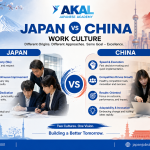
Hardly any cultural dimension has a more profound impact on organizational speed than that of authority structure. While both India and Japan have a hierarchical culture, the way that hierarchy is built and its impact are entirely different.
India
- Top-down decision-making is general, yet under greater scrutiny due to the Gen Z employee base.
- Hierarchy reflects caste, family connections, and educational background, not necessarily tenure.
- The jugaad mentality leads to unofficial ways of getting things done that circumvent the chain of command.
- Family-owned business tradition prevails among mid-range businesses.
- In an assertive communication approach, disagreements are openly expressed.
- Faster promotion rates exist in tech and startup industries.
Japan
- Decision-making by consensus using the nemawashi (ringi) approach, in which all parties discuss before reaching a conclusion.
- The senpai-kohai (senior-junior) chain of command is fundamentally relational rather than hierarchical.
- Low-context communication, in which non-verbal cues such as silence carry significant meaning.
- Promotions based on seniority are common, but are increasingly being replaced by performance-based promotions.
- Harmony within the group (wa) takes precedence over individual assertiveness.
- Challenging a superior is considered culturally unacceptable and psychologically risky.
Comparing India vs Japan Work Culture
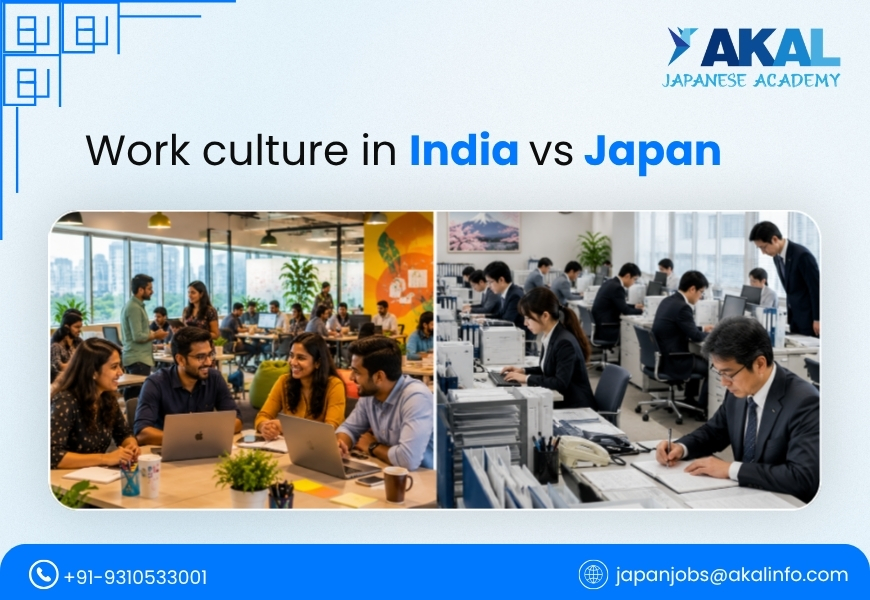
Comparing the work culture of these two countries reveals two very different approaches to how organizations manage people, performance, and productivity. This table helps global leaders identify different practices they can adopt from both countries to build more resilient and high-performing teams.
| Dimension | In India | In Japan |
| Workforce Median Age | 28 years, youngest major economy globally | 48 years, one of the oldest in the world |
| Employee Engagement | 19–23% (2025) — steepest global decline | Consistently among the lowest of OECD nations |
| Average Work Hours | ~49 hrs/week, but still overwork is culturally glorified | 1,654 hrs/year in 2024; overtime capped at 45 hrs/month |
| Decision-Making Style | Leader-lead decision with informal problem-solving | Consensus-based (nemawashi/ringi); slow but inclusive |
| Communication Style | Explicit and direct pushback is normal | High-context, indirect; reading between lines is required |
| Innovation Approach | “Jugaad” – adaptive, improvisational, resource-light | “Kaizen” is incremental, process-driven, quality-focused |
| Hybrid/Remote Work | 74% prefer hybrid work culture it’s a strong Gen Z demand | 24.8% remote; cultural resistance despite policy support |
| Hierarchy Type | Multi-dimensional; increasingly meritocratic in tech | Seniority-based; senpai-kohai structure deeply embedded |
| Burnout / Overwork | 59% experiencing burnout — #1 globally | 1,304 karoshi cases in 2024; 1 in 5 at risk |
| Lifetime Employment | Not the norm; job-hopping accepted | Historically dominant; eroding but still a cultural anchor |
| Work-Life Balance | Structure improvement where hustle culture remains a pressure | OECD score 3.4/10; reform underway but slow |
Why are overwork and burnout rising in India and Japan?
Japan: The Karoshi Crisis Continues
How is work culture in Japan when viewed through the lens of human wellbeing? The answer in 2026 remains sobering. The concept of ‘karoshi’, death by overwork, was first documented in Japan in 1969 when a 29-year-old newspaper employee died from a stroke attributed to an excessive workload. Over five decades later, the phenomenon has not been eradicated.
Cases of ‘karoshi’ have escalated to a whopping 18%, totalling 1,304 deaths by karoshi in 2024, with 883 people succumbing to mental disorders from excessive work pressure, the highest recorded ever.
Under the Work Style Reform Act, Japan now caps overtime at 45 hours a month and 360 hours a year through Article 36 of the Labor Standards Act. The Tokyo Metropolitan Government plans to implement the four-day workweek trial for its civil servants in 2025. Yet, loopholes remain. Instances where an employer compels workers to conceal their working hours are quite common. In fact, 7% of employers provide their workers with the required one rest day per week.
That said, there has been some improvement, as the data below shows. In fiscal 2024, the average Japanese employee worked 1,654.2 hours, down 17.7 hours from a year earlier.
India: A Different Kind of Overwork Problem
South Asia has the longest average work hours in the world at 49 hours per week, and over a third of the global workforce already works beyond the 48-hour threshold. According to the McKinsey Health Institute, 59% of Indian employees are currently experiencing burnout symptoms, placing India at number one globally against a worldwide average of just 20%.
The overwork culture in India is not about institutional loyalty (as in Japan) but about insecurity, performance pressure, and a leadership culture that has glorified extreme hours. Overwork was normalized as dedication, with leaders openly calling for 70-90-hour work weeks. The organizational and human toll is now empirically undeniable.
India vs Japan: Engagement, Burnout & Wellbeing Metrics
| Metric | In India | In Japan |
| Employee Engagement Rate | 19–23% (2025) — steepest global decline | Among the lowest of OECD nations |
| Manager Engagement Rate | Dropped from 39% → 30% in one year | Not separately tracked at national level |
| Burnout Prevalence | 59% experiencing burnout | 1 in 5 workers at karoshi risk |
| Overwork-Related Deaths | No formal ‘karoshi’ classification; burnout is the leading cause | 1,304 recognized cases in 2024, all-time high |
| Mental Health Disorders (Work-Related) | Burnout-driven; underreported due to stigma | 883 recognized cases in 2024, the highest on record |
| Average Weekly Work Hours | ~49 hrs (South Asia avg) | ~31.8 hrs official; significantly higher with unpaid overtime |
| Work-Life Balance Score | No formal OECD index score | 3.4 / 10 (near bottom among developed nations) |
| Annual Cost of Disengagement | ~$351 billion (≈9% of GDP) | Not formally quantified at national level |
| Paid Leave Utilization | Low cultural pressure not to use full leave | Among the lowest globally, improving under reform |
| Remote Work Adoption | 36% hybrid; 14% fully remote | 24.8% remote, declining since 2021 |
| Wellness Program Adoption | Growing mental health benefits expanding in IT/BFSI | Legally mandated stress checks for companies over 50 employees |
| (Work-Related) Suicide / Attempted Suicide | Underreported, there is no dedicated national tracking system | 79 cases recognized in 2024 under karoshi classification |
How engaged and satisfied are employees in India vs Japan?
Engagement is one of the most useful metrics for assessing work culture health because of a simple reasons, it captures motivation, belonging, and alignment all at once. The 2025-2026 data for both countries tell a story of underperformance but for structurally different reasons.
India has witnessed engagement declining rates, falling to just 19% in 2025 from 24% in 2024. It was the sharpest decline seen across all countries globally that year. Another survey conducted by Gallup revealed that around 23% of Indian workers reported themselves engaged with work, the lowest rate of engagement for four consecutive years now. There was an even sharper decline in manager engagement, from 39% to 30%, compared to individual contributor decline.
However, for quite some time now, another paradox exists within Japan, where its workers work very hard but are not engaged at all. In Gallup’s global ranking of workplace engagement, Japan is always one of the countries on the bottom of the list.
Japan stands in between the highest physical presence at work and the lowest rate of emotional engagement. Whereas India is the inverse: high stated enthusiasm but rapidly declining structural engagement. Both nations are burning through human capital in different ways.
Hybrid Work and Flexibility Trends in India vs Japan
Hybrid work has become one of the clearest indicators of how workplace expectations are changing across Asia. Understanding how is work culture in Japan compared with India reveals why hybrid work is now a major differentiator in talent attraction, employee engagement, and organizational performance.
IN India
- As of NASSCOM-Deloitte report 74% of Indian workforce prefers to work in hybrid model
- 52% of Gen Z workforce refuses jobs without hybrid model
- 50% work onsite every day, 36% hybrid, 14% remote
- Productivity improved by 18% in IT services with hybrid working but the feeling of belongingness declined by 11%
- 62% of CHROs identified “organizational culture” as primary challenge for hybrid model
- The probability of attrition increases by 2.3 times with poor hybrid design
IN Japan
- Only 24.8% of workers were working from home in 2023 compared to 27% in 2021
- F2F and office cultures have deep roots, particularly in manufacturing sectors
- The 2019 four-day work week test conducted by Microsoft Japan resulted in a productivity increase of 40%
- Panasonic introduced the four-day week system to 63,000 workers, but only 150 workers embraced the offer
- A cultural reluctance towards remote working practices exists simultaneously with an increased push for policies favoring flexibility
India’s workers have adapted to remote working environments. In Japan, even if workers are allowed flexibility, most of them will forego it simply because of the social stigma attached to being seen as less dedicated at work.
What is Jugaad in India vs Kaizen in Japan?
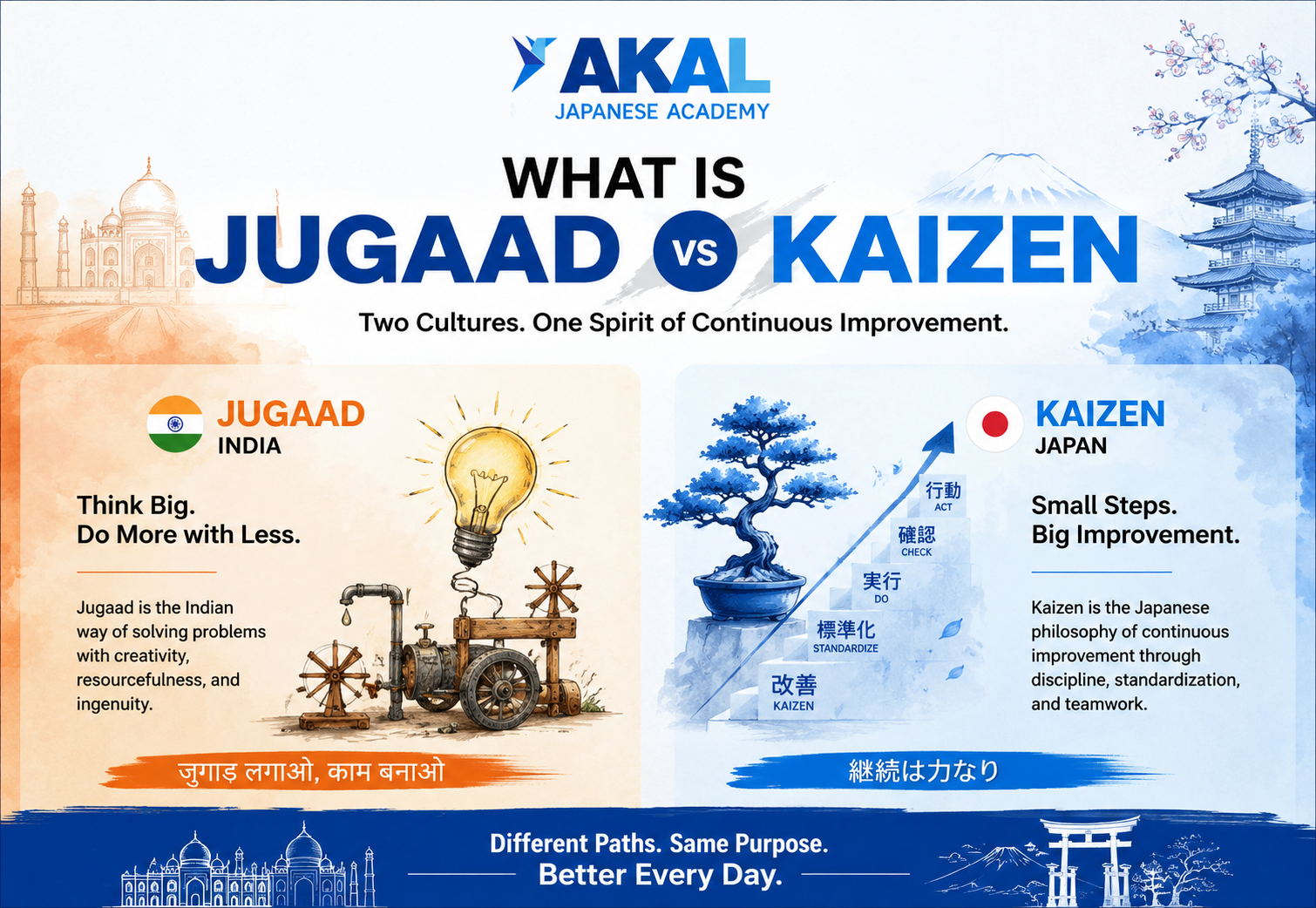
When comparing Indian and Japanese work culture, ‘jugaad’ and ‘kaizen’ explain two very different approaches to solving problems. In India, jugaad means finding quick and creative solutions with limited resources. In Japan, kaizen means making continuous improvements through structured processes and small, consistent changes.
As far as it is concerned, Indian companies rely more on rapidness and agility, whereas Japanese organizations place importance on excellence, accuracy, and procedural precision. It explains why Indian teams can operate quickly and efficiently, while Japanese teams dedicate themselves to improving processes and minimizing mistakes.
Neither method works independently. As far as global leadership is concerned, the best way to proceed would be to blend the adaptability of jugaad with the reliability of kaizen into one.This allows organizations to innovate quickly while maintaining high standards and long-term operational excellence.
Best Companies to Work For in Japan in 2026
Understanding how work culture in Japan is evolving is best illustrated through the companies that have earned recognition as model employers. The Great Place to Work Institute’s 2025 Asia rankings evaluated 3.2 million employee surveys across 14 countries. Japan placed 47 companies on the list, among the highest national counts in the region.
- GLOBIS Corporation: Rated 4th among the GPTW 100 Best Workplaces in Japan 2026 – its 13th consecutive listing, awarded for social impact, competency development, and psychological safety.
- Toyota Motor Corporation: Toyota capped annual overtime at 360 hours and issues active reminders for employees to leave by 7 PM. Kaizen was applied not just to manufacturing lines but also to employee wellbeing.
- Hitachi: The company introduced a digital attendance management system that records time worked and takes steps to prevent overworking for staff members who exhibit a persistent trend.
- Microsoft Japan: The four-day workweek trial conducted in 2019 resulted in a 40% boost in productivity, which is one of the most mentioned business cases in international HR. Microsoft Japan maintains flexible work practices that outperform those in mainstream Japan.
- Sony Group Corporation: Sony has blended Japan’s quality culture with global talent practices, such as investing in flexible work options, international hiring, and a results-orientated performance culture.
- Panasonic: Provided a voluntary four-day workweek arrangement for 63,000 workers. Very low participation, but the gesture counts. The message is clear from one of Japan’s biggest manufacturing companies: a world beyond overtime.
- SoftBank Group: As a multinational technology corporation, SoftBank has adopted a model involving AI in management and work practices that differ from traditional Japanese business organizations.
10 Leadership Lessons from India and Japan
-
Engagement loss is an economic emergency, not an HR metric.
At $351 billion in annual productivity losses, India’s disengagement crisis has crossed the threshold from organizational concern to macroeconomic risk. CHROs who frame it in these terms to their boards will secure more durable investment in culture infrastructure.
-
Japan’s karoshi problem is a leadership failure, not just a labour law gap.
However, the recorded incidences of ‘karoshi’ in 2024 continue to occur despite laws because the cultural inducements that encourage excessive work are still present. For instance, leaders who control the Japanese operations must lead by example in behavioural transformation.
-
Hybrid design in India requires architecture, not just permission.
74% of Indian workers want flexible work arrangements, but 62% of CHROs have reported that faulty hybrid work practices are diluting the company’s culture. The return on investment lies in designing hybrid arrangements.
-
Cross-cultural teams need explicit operating agreements.
By nature, jugaad and kaizen cannot coexist. Indian-Japanese partnerships will require some sort of consensus on how fast decisions should be made, their modes of communication, and what “approval” really entails in their respective cultures.
-
Manager quality is the most urgent lever in India.
Manager engagement dropped from 39% to 30% in one year. In India’s flattening organizational structures, managers are overseeing larger teams with less support, creating a cascade effect on all employee experience metrics.
-
Japan’s best companies prove reform is possible and profitable.
Microsoft Japan’s 40% productivity gain from a four-day week is not an anomaly. GLOBIS, Hitachi, and Toyota are demonstrating that culture reform and operational excellence are not in tension. The business case is now empirically established.
-
India’s young workforce is its competitive asset and its pressure point.
An average age of 28 implies that there will be a higher number of first-job holders and individuals concerned about their careers, thus demanding faster development compared to other countries.
-
Diversity is a competitive differentiator in Japan, not a compliance item.
With less than 1% of highly skilled roles held by non-Japanese workers, Japan’s diversity gap is also a talent gap in a shrinking labour market. Organizations that accelerate the inclusion of women and foreign nationals gain structural advantages.
-
Burnout is an organizational design problem, not a personal resilience problem.
Both Japan and India are guilty of fostering overwork. The problem is not solved by wellness applications but rather through recalibrating work schedules and key performance indicators, among others.
-
The next competitive frontier is psychological safety.
Disagreement is not tolerated well in Japanese culture, stifling creativity. In India, concerns about job security prevent constructive criticism. Companies in both markets which establish an environment conducive to speaking freely without repercussions will achieve remarkable creative results.